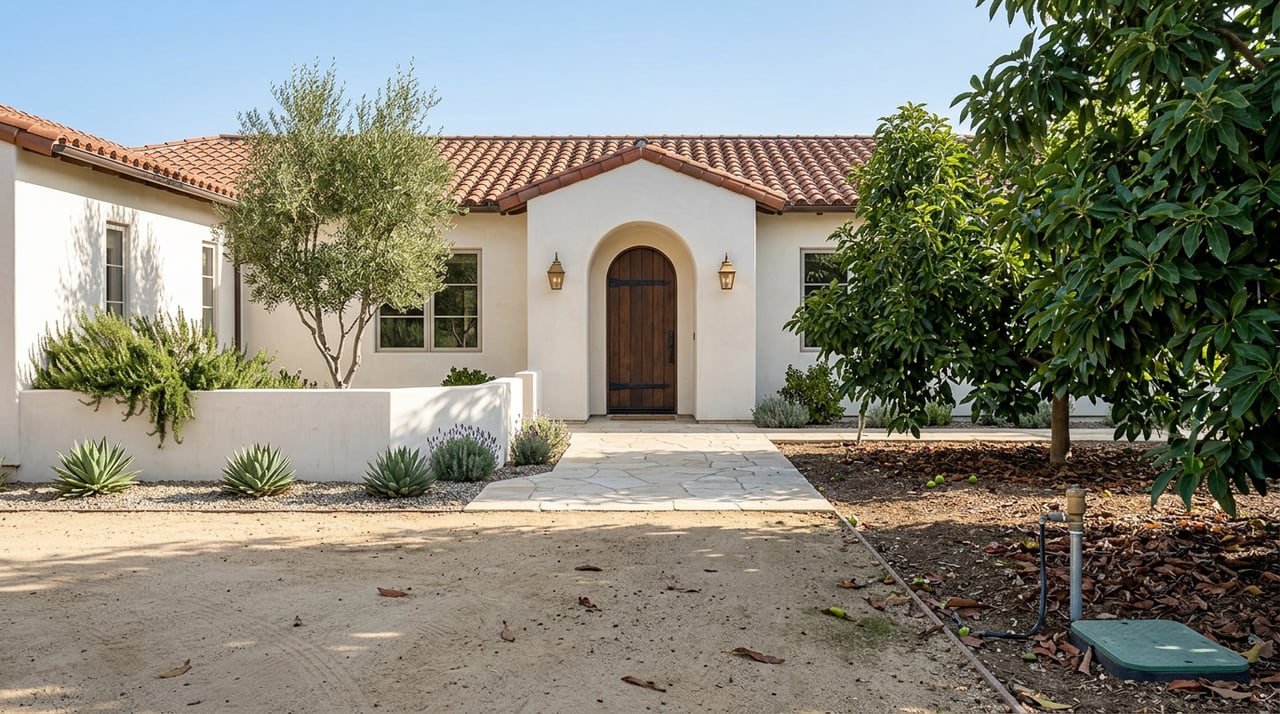
Pricing a home with acreage in Fallbrook is not the same as pricing a tract home. You have to weigh usable land, water reliability, crop potential, and zoning that protects the area’s rural character. If you get those details right, you reduce appraisal risk and attract the right buyers faster. In this guide, you’ll learn how appraisers think, what factors move price in Fallbrook, and a simple way to model grove income so you can set a confident list price. Let’s dive in.
Start with highest and best use
Fallbrook sits in unincorporated north San Diego County where the community plan and zoning aim to preserve rural and agricultural land. Many acreage parcels carry Rural Lands designations and Limited Agriculture zoning that control density and permitted uses. The County’s Fallbrook planning summary explains how these policies shape development and protect open space in the area. See the County’s overview of Fallbrook’s community planning to understand the framework that affects value and marketability (County of San Diego planning summary).
Before you pick a price, define the property’s most likely use in today’s market. Is it a residential estate with hobby acreage, or a producing agricultural unit? That answer guides which valuation approach carries the most weight and what buyers will pay for.
Measure what buyers value first
Usable vs. gross acres
In Fallbrook, buyers pay for usable, irrigable acres, not just total APN size. Steep slopes, drainages, and setbacks often cut the true footprint down to smaller building pads and grove rows. A simple map that outlines usable versus non-usable areas helps buyers compare apples to apples. The County’s Land Use Element highlights how slope and environmental constraints shape developable land, which is why usable acres trade at a premium (Land Use Element summary).
Water service vs. private wells
Reliable water is a major price driver, especially for avocados and citrus. Parts of Fallbrook are served by the Fallbrook Public Utility District, which has a long history supporting local agriculture. Other properties rely on private wells. Document whether you have FPUD or RMWD service and gather well permits, recent pump tests, and water quality lab results. The FPUD history page provides helpful context on agriculture in the service area (FPUD history), and the County’s Water Well Program explains testing and permit requirements for private wells (County Water Well Program).
Know the three valuation approaches
Sales comparison approach
For most homes on acreage, appraisers start with comparable sales of similar properties nearby. They look hard at topography, usable acres, utilities, and grove or land improvements. When there is an active market for similar homes-on-acreage, this approach is usually primary (Appraisal Institute guidance).
Income approach
If the parcel is marketed and purchased primarily for agricultural income, the income approach may support or test value. It relies on documented yields, market prices, operating costs, and a market-derived capitalization rate. For small hobby groves with limited records, the income approach is usually not persuasive on its own (Yellow Book overview).
Cost approach
The cost approach is useful for valuing site improvements like newer irrigation systems, barns, pumps and tanks, or permitted utility buildings. It estimates replacement cost less depreciation. For the grove land itself, buyers rarely rely on cost as the main indicator of value (Yellow Book overview).
Fallbrook price impact checklist
Run through these factors early. Each one can create meaningful dollar adjustments.
- Usable acres: Map buildable pads, grove rows, and non-usable areas. Buyers price the irrigable footprint higher than steep or protected acres (Land Use Element summary).
- Zoning and density: Confirm A-70 or other zoning, Rural Lands designations, and any overlays that affect permitted uses or potential parcelization. This frames highest and best use (County planning summary).
- Water reliability: Clarify FPUD or RMWD service vs. private well. Provide service letters where possible and well documentation, pump tests, storage, and lab results (FPUD history; County Water Well Program).
- Onsite wastewater: Locate septic permits and percolation reports to reduce appraisal and lender questions. The County’s design standards guide approvals for onsite systems (Onsite Wastewater Design Manual).
- Environmental constraints: Check for sensitive habitat or agricultural-preserve contracts. Recorded constraints and CEQA-related actions can affect timing and near-term use (County CEQA record example).
- Farm improvements: Document permitted irrigation systems, frost protection, cold storage or packing areas, all-weather roads, and any permitted employee housing. Unpermitted structures often reduce buyer confidence (Appraisal Institute guidance).
Model grove income in 5 steps
If your avocado or citrus acreage is truly commercial, a simple, transparent income model helps buyers and appraisers. Keep it conservative and well-documented.
1) Confirm bearing acres
Count only the acres in actual production, not the total APN. Provide a map with tree rows and unproductive areas noted. Usable bearing acres are what drive income and value (Land Use Element summary).
2) Select a realistic yield range
Use local and industry data to set low, mid, and high pounds per acre. The California Avocado Commission’s crop updates outline statewide volume and regional yield patterns, which help frame expectations. University and industry literature also documents wide variability from alternate bearing, irrigation, salinity, and disease such as Phytophthora root rot (CAC mid-season update; UC industry literature).
3) Estimate gross revenue
Multiply pounds per acre by a conservative, current grower price per pound. Prices move during the season, so check recent handler or industry reports. Keep your assumptions current and clearly labeled with dates.
4) Subtract operating costs
Deduct harvest labor, packing and marketing, seasonal sprays and fertilizer, irrigation energy, pruning, pest control, and management. Use local enterprise budgets when possible. Your packer and farm advisor can help you tighten these figures.
5) Capitalize only if appropriate
If the property is marketed as a commercial orchard, you can convert stabilized net income into a value indication using a market cap rate. For most estate homes with hobby acreage, the sales comparison approach will lead, and the income model serves as supporting context (Yellow Book overview).
A quick example of the method
The numbers below are an example to show the math, not a guarantee. Replace them with your grove’s documented data and current prices.
- Bearing acres: 10 acres of producing Hass.
- Yield scenarios: low 4,000 lbs/acre, mid 7,000, high 10,000, reflecting wide variability seen in industry sources (CAC mid-season update).
- Price to grower: $1.00 per lb for illustration.
- Operating costs: $3,000 per acre per year.
Mid case:
- Gross per acre: 7,000 lbs × $1.00 = $7,000
- Net per acre: $7,000 − $3,000 = $4,000
- Net for 10 acres: $40,000
- If marketed as a commercial orchard and an 8 percent cap rate fits your market, implied value indication is $40,000 ÷ 0.08 = $500,000 for the orchard component.
This sensitivity view helps buyers and appraisers see how yield and price swing outcomes. Document 3-year production and packer receipts whenever possible to support your model (CAC mid-season update).
Prepare your file before you list
Well-organized records speed up buyer due diligence and reduce appraisal conditions. Build a clean folder with:
- Legal: deed, legal description, parcel map, easements.
- Entitlements: County zoning, community plan designation, use permits, agricultural-preserve status, and any recorded notices that affect use or taxes (County planning summary).
- Water: FPUD or RMWD service confirmation, private well permits and logs, pump-test results with gallons per minute, storage tank sizes, and recent potable water lab results (FPUD history; County Water Well Program).
- Onsite wastewater: septic permits or certifications and percolation or grading reports (Onsite Wastewater Design Manual).
- Grove records: tree map with age and spacing, 3+ years of harvest volumes, packing receipts, spray and fertilizer logs, and any disease treatments, especially for root rot or significant pest events (UC industry literature).
- Improvements: permits and receipts for pumps, tanks, irrigation upgrades, barns, packing areas, fencing, greenhouses, and any permitted employee or guest housing (Appraisal Institute guidance).
Avoid common pricing pitfalls
- Overstating usable acres. If you quote gross acreage without mapping unusable slope or protected areas, expect appraisal cuts later (Land Use Element summary).
- Weak or unpermitted wells. Low output, poor water quality, or missing permits narrow your buyer pool and can trigger costly contingencies (County Water Well Program).
- Old or diseased trees. Alternate bearing and Phytophthora root rot reduce production and hurt any income-based argument for value (UC industry literature).
- Missing environmental checks. Agricultural-preserve contracts or habitat constraints can limit near-term changes and influence pricing and timing (County CEQA record example).
Present price the right way
Lead with what matters to buyers and appraisers. Put usable acres, water source and reliability, and permitted improvements at the top of your listing. If the orchard is producing, share a conservative 3-year average of harvest pounds per acre or gross receipts and name the handler. Industry updates help explain seasonality and yield ranges for context (CAC mid-season update). If the grove is small or more lifestyle focused, lean on comparable sales of similar homes with hobby acreage and present the orchard as an amenity rather than an income source (Appraisal Institute guidance).
Next steps
Pricing acreage in Fallbrook is about clarity. When you document usable acres, water, zoning, and any grove income, you give buyers confidence and keep appraisals on track. If you are planning to sell, we can help you gather the right records, position the property, and market it aggressively to the right audience. Connect with Meeker Realty Group for expert pricing guidance and to Get Your Free Home Valuation.
FAQs
What does A-70 zoning mean in Fallbrook?
- A-70 is Limited Agriculture zoning that outlines permitted agricultural and residential accessory uses and helps preserve rural character in the community planning framework (County planning summary).
How do appraisers treat usable acres vs. gross acres in Fallbrook?
- Appraisers and buyers place far more value on irrigable, buildable acres than on steep or protected areas, so mapping usable versus non-usable land is essential for accurate pricing (Land Use Element summary).
Does FPUD water service affect value for acreage homes?
- Reliable district water can increase buyer confidence, while private wells require documented permits, pump tests, and lab results to avoid discounts or delays (FPUD history; County Water Well Program).
When should I use the income approach for an avocado grove in Fallbrook?
- Use it when the property is marketed as a commercial orchard with verified multi-year production, current market prices, and realistic operating costs; otherwise, sales comparison will lead (Yellow Book overview; Appraisal Institute guidance).
What documents should I gather before listing acreage in Fallbrook?
- Compile zoning and community plan records, water service or well documents, septic permits, grove production and packer receipts, and permits for improvements to streamline underwriting and appraisals (County planning summary).
How are wells and septic systems evaluated in San Diego County?
- The County requires permits and testing for private wells and reviews soil and percolation data for onsite wastewater systems, so current records help prevent closing delays (County Water Well Program; Onsite Wastewater Design Manual).