A closed golf course can become many things. It can sit unused. It can trigger years of debate. It can become the site of a development proposal that bears little connection to what came before.
Fallbrook took a different path with the old Fallbrook Golf Course on Gird Road.
The 18-hole public course closed in 2016 after operating in Gird Valley for 56 years. Today, the roughly 116-acre property is Monserate Vineyards & Winery, an estate with vineyards, lakes, mature oaks and sycamores, a restaurant, a tasting room and private-event venues.
The lesson is bigger than golf or wine. Fallbrook did not preserve this property by freezing it in time. Local owners gave it an economically active use that still reflects the area’s agricultural roots and open setting.
That distinction says a great deal about how this community changes.
The Course Did Not Close Quietly
The Fallbrook Golf Course was built in the 1960s and occupied approximately 116 acres in Gird Valley. After months of deteriorating conditions, interrupted operations and unsuccessful purchase negotiations, it closed for the final time on July 26, 2016.
The uncertainty surrounding the property mattered because of its scale. This was not a small commercial parcel. It was a long-established piece of Gird Valley with fairways, mature trees, water features and a public identity built over more than five decades.
Housing development became a concern during that period, but the distinction between concern and approval is important. The supplied record does not show that a residential project had been formally approved. It shows that local residents and the eventual buyers were worried about the possibility of a more intensive development fight.
Longtime Fallbrook residents Jade and Julie Work completed their purchase through Gird Valley, Inc. on November 15, 2016. Both graduated from Fallbrook High School and had personal ties to the valley.
Their choice was especially revealing because Jade Work owned Integrity Golf, a golf-course construction company. Rebuilding a golf course fell directly within his professional experience. He concluded that restoring this one was not economically practical after its grass had died.
The new plan called for vineyards, a winery, a restaurant and a barrel room.
Fallbrook did not save the old golf course by trying to make golf work again. It kept the property recognizable by finding a different use for the land.
From Final Round to First Vintage
Monserate’s development unfolded over several years rather than through a single grand reveal.
| Year | What changed at the former golf course |
|---|---|
| 2016 | The course closed on July 26. Jade and Julie Work completed the purchase in November. |
| 2017 | Major vineyard planting added 75 acres of vines. |
| 2018 | More planting brought the estate to 100 acres of vines. |
| 2019 | Monserate completed its first harvest and produced its first vintage. |
| 2021 | The first wines were bottled, and the winery held a public soft opening on October 15. |
| 2024 | Monserate identifies this as its grand-opening year. The San Luis Rey American Viticultural Area also became effective that September. |
| 2025 | Monserate was named Domestic Winery of the Year at the San Diego International Wine & Spirits Challenge. |
| 2026 | Its estate-grown 2023 Negroamaro was named Domestic Wine of the Year by the same competition. |
There is a small discrepancy in the historical record. A 2021 local news caption said the first vineyard was planted in 2016, while Monserate’s current official history identifies 2017 as the first major planting year. The most accurate way to describe the transition is that vineyard development began after the 2016 purchase, followed by 75 acres of documented planting in 2017.
The staggered opening dates also tell different parts of the same story. Monserate welcomed the public during a soft opening in October 2021. Its official history identifies 2024 as the grand opening. Neither date needs to be treated as an error. One marked the start of public operations, while the other marked the fuller arrival of the estate.
Even the Name Came From Fallbrook
The property’s new identity was not chosen in a private branding meeting far from town.
A public contest generated nearly 1,400 proposed winery names. The winning entry, Monserate Winery, referenced the Rancho Monserate land grant of 1846 and nearby Monserate Hill. Blair Cooke Davey was credited with being the first person to submit the selected name.
That local naming process reinforces the larger point. The new business did not need to erase the property’s regional identity to create something marketable. Its name reaches further back into local history than the golf course itself.
The old clubhouse had its own distinctly local conclusion. Before it disappeared, North County Fire Protection District crews used the structure for six days of live-fire training. Seventy-two engine companies reportedly participated before the clubhouse was burned down on March 31, 2017.
One use ended. Another began. Even the building’s removal served a practical community purpose.
What Replaced the Fairways
Monserate is sometimes summarized as a winery built on an old golf course, but that description leaves out much of what the property has become.
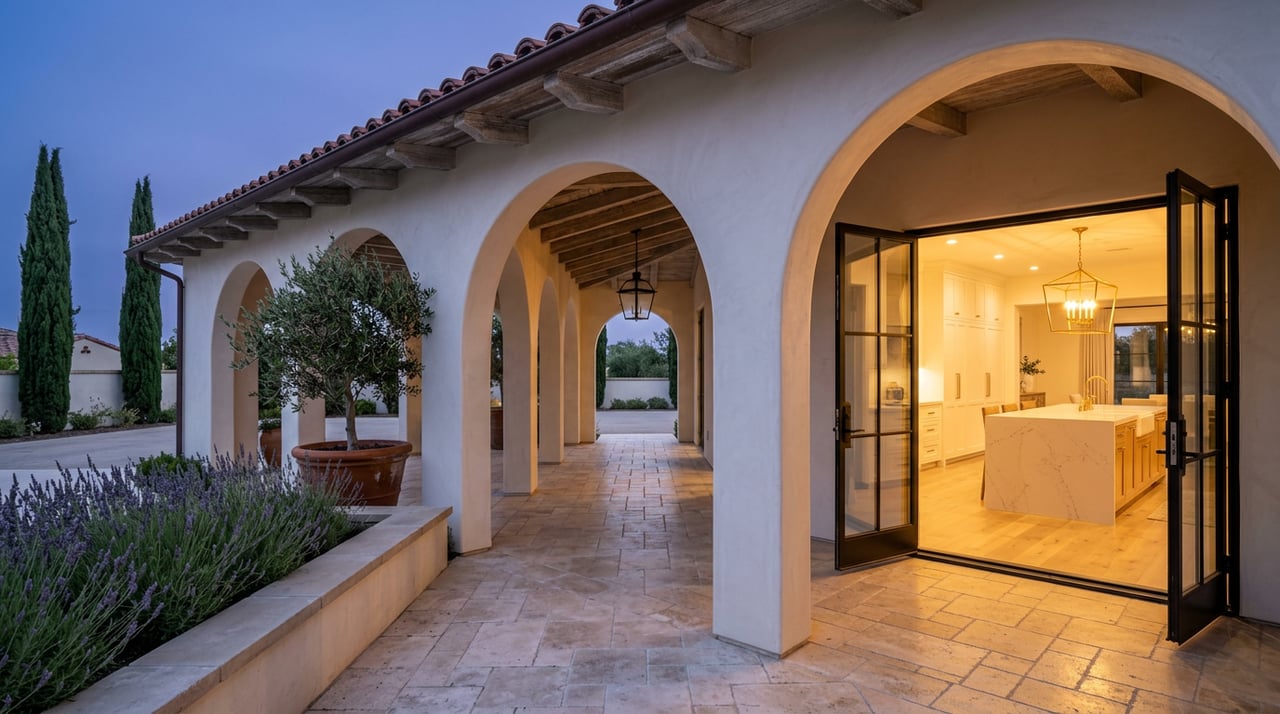
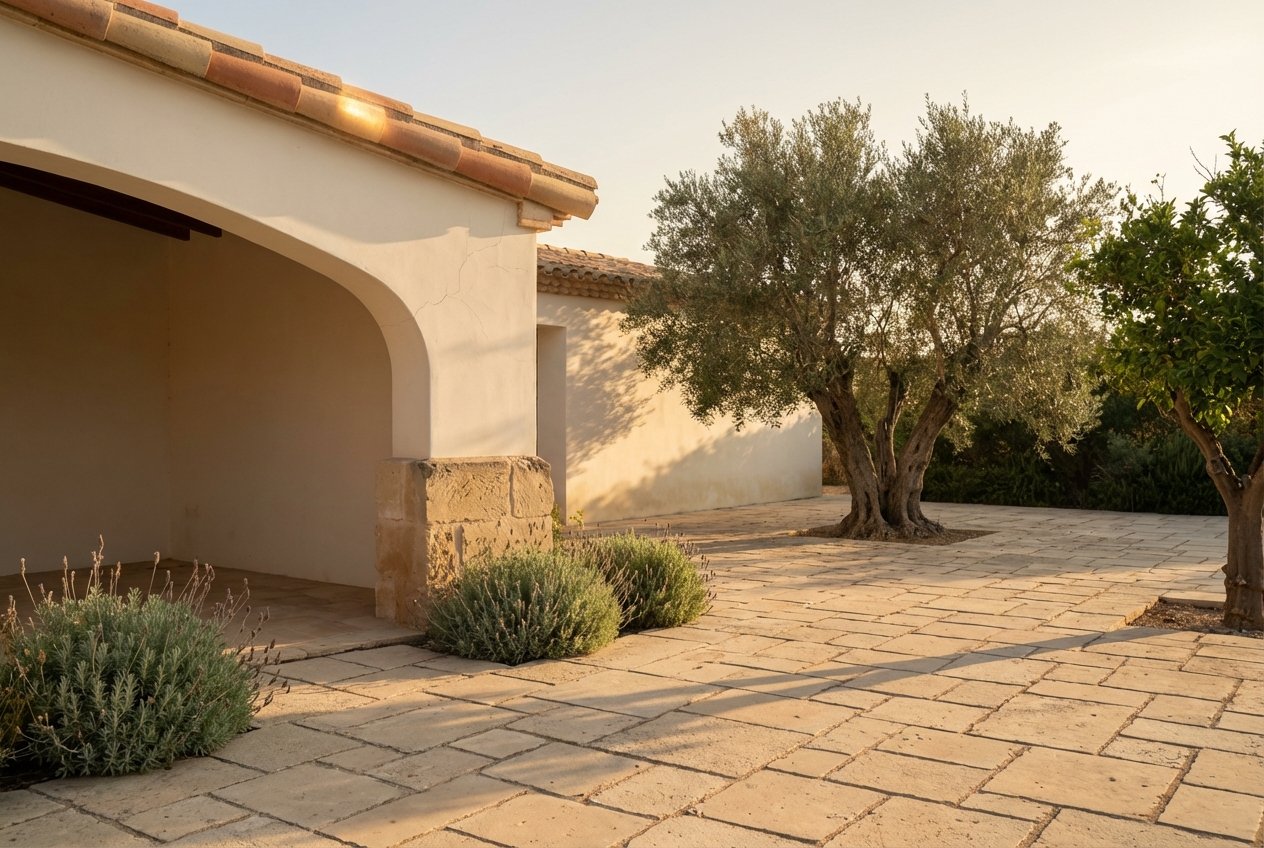
The current estate combines working vineyards with an Italian-style restaurant, a tasting room, a courtyard, lakes and mature oak and sycamore trees. It also hosts weddings and other private events.
Three dedicated venue pages identify the Tuscan Estate, Villa de Fiore and Monte Bella. Monserate describes Monte Bella as its newest venue, with the estate’s largest event hall, a central courtyard and views across the vineyards, lake and surrounding hills.
The restaurant offers two distinct experiences. Guests can choose indoor full-service dining or outdoor courtyard dining with a menu that includes Naples-style pizza. The winery also offers guided tastings and sells estate-grown wines.
Those uses matter because they turn the former course into a place people can continue to visit. The public experience changed from tee times and fairways to dining, tasting and scheduled events, but the property remained active rather than becoming an inaccessible remnant of a failed business.
Recognition Changed the Story Again
For several years, the Monserate story was primarily about reuse. By 2025, it had also become a story about the quality of what was being produced there.
The 2025 San Diego International Wine & Spirits Challenge named Monserate Domestic Winery of the Year. It was the first time in the competition’s 43-year history that a San Diego County producer received that honor.
In February 2026, the same competition named Monserate’s estate-grown 2023 Negroamaro its Domestic Wine of the Year.
That progression provides the strongest current reason to revisit the old golf-course story. Monserate did not merely occupy the land. It developed an agricultural product that earned independent recognition less than a decade after the property changed hands.
The timing also coincides with a broader shift for Fallbrook wine. The federal Alcohol and Tobacco Tax and Trade Bureau established the San Luis Rey American Viticultural Area effective September 30, 2024. The official mapped area includes Fallbrook and other parts of North San Diego County.
The former golf course now sits inside a federally recognized wine-growing area that did not exist when the course closed.
One Property, Part of a Larger Local Industry
Monserate is not operating alone. It is one of six named local wineries scheduled to participate in the Fallbrook Wine Festival on October 10, 2026, at Daily Blooms Farm.
The published winery list includes:
- Fallbrook Winery
- Myrtle Creek Vineyards & Winery
- Monserate Vineyards & Winery
- Adobe Hill Winery
- Estate D’Iacobelli
- De Amo Winery
That list places the Gird Road property within a growing local network. The transition from golf to grapes now makes more sense than it might have in 2016 because Fallbrook has a recognized viticultural area, multiple producers and a festival built around local wine.
This does not mean every large Fallbrook property will follow the same course. It does show that agriculture and hospitality can work together as a form of adaptive reuse here.
Planning a Visit to Monserate
As of July 2026, Monserate publishes the following tasting-room and dining schedule:
- Sunday and Monday: 11 a.m. to 5 p.m.
- Tuesday: Closed
- Wednesday through Saturday: 11 a.m. to 5 p.m.
- Restaurant: Last seating at 4 p.m.
The winery is family-friendly during regular weekday hours. Saturday and Sunday are limited to guests age 21 and older.
Outside food and beverages are prohibited. Pets are not permitted, although trained service animals on leashes are welcome. Indoor restaurant reservations are recommended if guests want to ensure a table.
Hours and policies can change, so confirm the current information through Monserate’s official visit page before heading to 2757 Gird Road.
What This Story Does and Does Not Prove
It would be easy to turn the old golf course into a simple story about a town rejecting development. The documented history is more precise.
Housing was a community concern, and the Works said preventing a more intensive development fight influenced their purchase. That does not establish that housing had been formally approved. The available research also does not conclusively confirm that the entire 116-acre property is permanently protected by recorded conservation easements.
What the evidence does show is meaningful on its own:
- A failing 56-year-old golf course closed.
- Local buyers decided that rebuilding it was not economically practical.
- They selected a new use tied to agriculture, dining and community events.
- Mature trees, lakes and much of the property’s open visual identity remained part of the experience.
- The winery became an award-winning producer within the new San Luis Rey AVA.
That is enough to support the larger conclusion without overstating it.
Why Fallbrook Homeowners Should Care
Local real estate is shaped by more than individual houses. Longstanding properties, working agricultural sites, restaurants and gathering places influence how people understand an area.
The former Fallbrook Golf Course is a useful example because it could have become a symbol of decline. Instead, it became a new local reference point with a name chosen by the community, products grown on the property and an identity connected to Gird Valley.
For homeowners, that kind of local knowledge matters when it is time to present a property to the market. Effective marketing should explain the setting around a home with the same care used to describe the home itself. In Fallbrook, that means understanding how rural roads, agricultural uses, established trees, local businesses and destination properties fit together.
A generic description can list bedrooms and square footage. A locally informed strategy explains why the location is distinct and how to communicate that value accurately, without exaggeration.
The old golf course became a winery because its new owners saw another productive future for the land. That combination of practicality and respect for place is the real Fallbrook story.
If you are considering selling, start with a clear understanding of your home’s current position. Meeker Realty Group provides consultative guidance, hands-on listing preparation and marketing built around the details that make each North County property different.