Two homes on the same Murrieta street can list for the same price, share the same floor plan square footage, and still walk into a mortgage closing with completely different insurance outcomes. The difference has nothing to do with paint, staging, or even the year the subdivision broke ground. It comes down to what's over the drywall: the roofing material the original builder chose, and whether that choice happens to fall on the safe or exposed side of a threshold most buyers never think to ask about.
That threshold is showing up across Southern California right now because of how insurers underwrite older roofs, and Murrieta is unusually exposed to it. Roughly half the city's housing stock went up in a single concentrated building wave, according to NeighborhoodScout's analysis of Murrieta housing data, which puts the share of homes built since 2000 near 49.78 percent. A city built that fast, in that tight a window, ages as a block. The problem is that the roofs covering those homes didn't all get built the same way.
The Cliff Insurers Are Watching
California carriers have gotten more aggressive about roof age in the last two years, and 2026 has been the year it became a routine part of underwriting rather than an edge case. Most insurers writing homeowners policies in the state now treat an asphalt shingle roof as a liability once it crosses somewhere between 20 and 25 years old. At that point a carrier may require a certified inspection before renewal, shift the policy from full replacement cost coverage to actual cash value, or decline to write a new policy on the home at all. An actual cash value payout accounts for depreciation, so a homeowner whose 22-year-old shingle roof fails in a windstorm might collect a fraction of what a full tear-off and replacement actually costs.
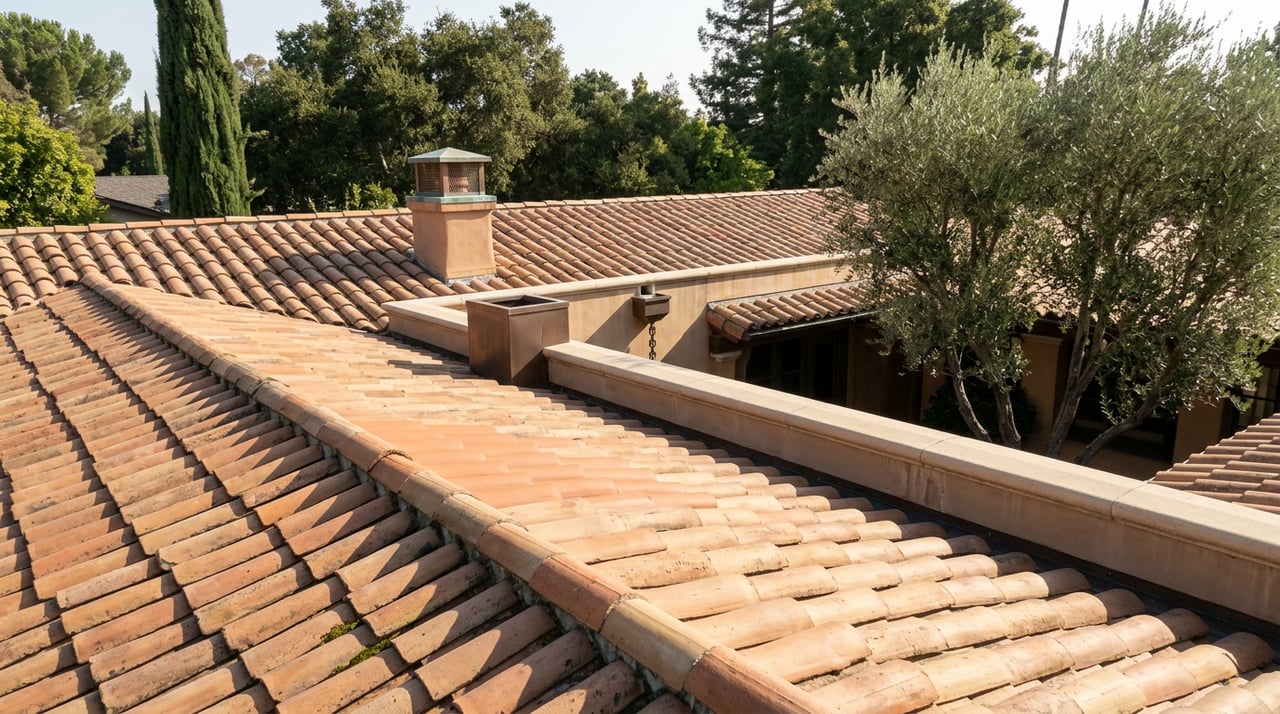
Tile and metal roofs get treated differently. Those materials typically carry a 40 to 50 year runway before the same insurers start asking questions. A home with a clay tile roof built in 2003 is nowhere near that conversation. A home with an asphalt shingle roof built the same year is already past it.
This is the part that doesn't show up in a listing sheet or a Zestimate. "Built in 2003" tells you nothing about which side of that line a house sits on. You have to know the roof.
Why Greer Ranch Isn't Worried Yet
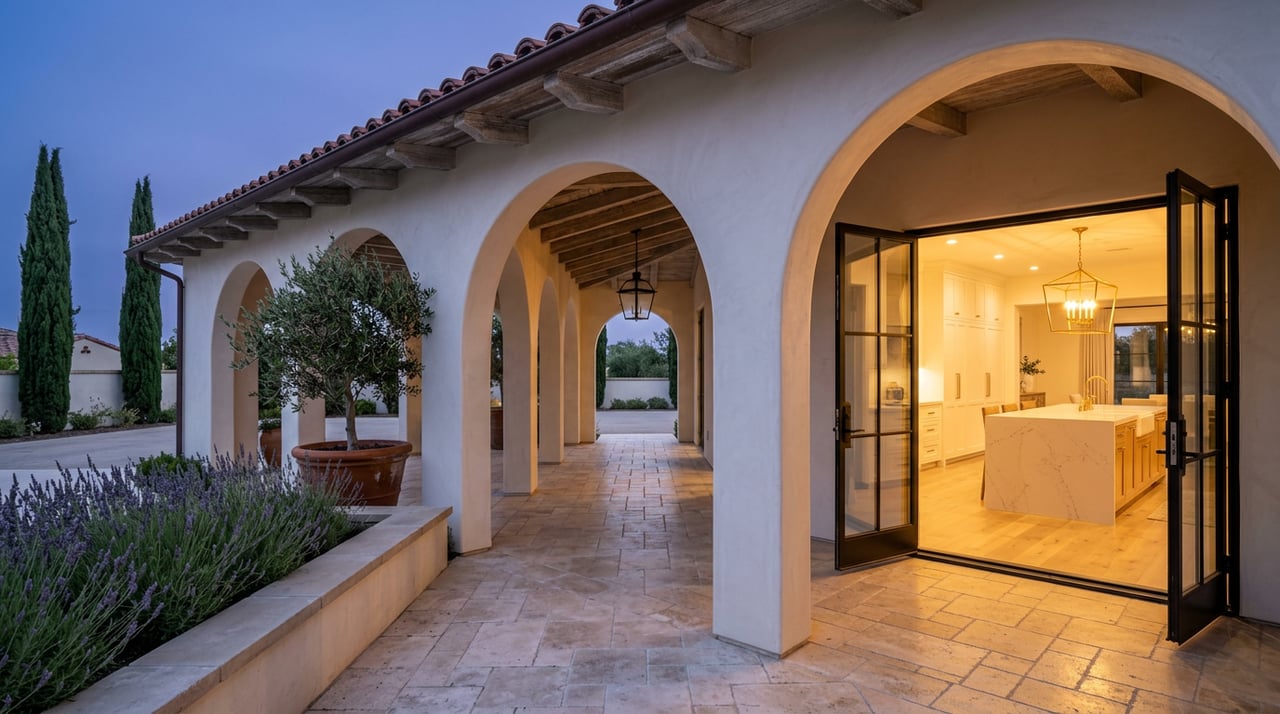
Greer Ranch is a useful case because it removes the guesswork. The gated community west of Interstate 215, built in the early 2000s along the foothills near Murrieta Hot Springs, was constructed with Spanish-style architecture throughout: stucco exteriors and terracotta tile roofs on nearly 700 homes. That construction choice means Greer Ranch, despite being one of the older subdivisions swept up in Murrieta's building boom, is decades away from the insurance scrutiny hitting comparably aged asphalt-shingle tract homes elsewhere in the city. A 23-year-old tile roof is still early in its expected service life. A 23-year-old shingle roof is at the point where a carrier's inspector shows up before the renewal notice does.
That gap has nothing to do with how well either home was maintained. It was decided by a construction spec sheet two decades ago, long before either roof ever leaked or needed a repair.
The Twist Inside a Single Subdivision
Greer Ranch is the clean example because its roofing material is consistent across the community. Not every Murrieta subdivision built in the same era offers that consistency, and that's where the risk gets harder to spot from the street.
Spencer's Crossing, part of the broader Murrieta housing market on the city's northeast edge, was established in 2007 and has continued to develop in phases since. Its builder, Lennar, marketed it as a collection of detached homes spanning multiple architectural styles: Cottage, Craftsman, Spanish, and Traditional, built across smaller villages within the larger 607-acre plan. That variety is part of the community's appeal, but it also means the roofing material isn't uniform the way it is at Greer Ranch. A Spanish-style home in one village may carry a tile roof with the long insurance runway that comes with it. A Craftsman or Cottage-style home a few streets over, built in the same year by the same builder, may carry composition shingle instead, sitting on the shorter clock.
Two houses in the same master-planned community, built in the same construction phase, priced within a few thousand dollars of each other, can carry entirely different insurance futures. Nothing in the listing photos tells you which one you're looking at.
What This Actually Changes at the Negotiating Table
For a buyer comparing two Murrieta homes that look identical on paper, this is the question worth asking before you write an offer: what is the roof made of, and is there a permit on file for a full replacement? A full, permitted reroof resets the age clock in most carriers' underwriting systems. A patch job or partial repair generally does not. If a seller can produce a roofing permit showing a recent full replacement, that's a stronger insurability story than a roof that merely looks fine from the driveway.
For sellers sitting on a home built in that early-2000s window with a composition shingle roof, this is worth getting ahead of rather than discovering during a buyer's underwriting. A buyer whose lender requires proof of insurability before closing can lose financing entirely if a carrier declines the policy over roof age. A pre-listing roof certification, or documentation of a recent permitted replacement, removes that friction before it becomes a renegotiation point in escrow.
The broader Murrieta market context makes this worth taking seriously now rather than later. As of August 2026, single-family homes in the city were listing at a median of roughly $695,000, while sold prices over the preceding months have run closer to $660,000, a gap that reflects a market where buyers have room to negotiate rather than one where sellers set the terms. Homes have also been sitting longer than they did during the 2021 to 2022 rush, with days-on-market figures this year ranging from roughly six to eleven weeks depending on the data source and how a given listing is priced. In a market with that much breathing room, an unresolved roof-insurance issue is exactly the kind of thing that stalls a deal or hands a buyer leverage to renegotiate price.
Frequently Asked Questions
Does a home's age alone tell me anything about its roof? Not on its own. Two homes built the same year in Murrieta can carry roofs with completely different expected lifespans depending on the original material. Ask specifically about roofing material and permit history rather than relying on the year built.
Does filing an insurance claim reset the age of an older roof? Generally no. Insurance industry sources indicate that a partial repair or patch from a claim is typically still treated as part of the original roof system by underwriting. A full, permitted replacement is usually what resets the clock.
If my roof is tile, am I exempt from this issue entirely? Not exempt, just further from the threshold. Tile and metal roofs generally carry a longer runway with most California carriers, often 40 to 50 years, but individual insurer policies vary, and a damaged or poorly maintained tile roof can still draw scrutiny regardless of age.
If you're comparing homes in Murrieta and want to know what's actually under a roof before you fall in love with a floor plan, or you're getting ready to list a home built in that early-2000s window and want to head off an insurance surprise before it costs you a buyer, Meeker Realty Group can walk the property with you and pull the permit history before you're locked into an offer. Get Your Free Home Valuation and let's look at what's actually on the roof, not just the year on the listing sheet.